PayPal v. Venmo: Which Is Better?

When it comes to sending and receiving money, there are plenty of payment platforms out there you can utilize. Rather than dealing in physical cash or making a transfer through your bank, you can use these services to give or get money quickly and easily. Which is the best platform to go for, though?
PayPal and Venmo stand as two of the most popular, with their sizable userbases meaning you can trust them. Surely, though, one is better than the other, right? Well, that depends on what you're looking for in this service, with each having its pros and cons. Once we understand a bit more about both of them, it should be easier to answer one question - PayPal v. Venmo: which is better?
Both apps are pretty accessible, but Venmo is more restrictive about sending money
Something that many people look to with payment platforms like these is accessibility. The easier that something is to access and use, the better. The good news about Venmo and PayPal is that you can get to them in all manner of ways, including desktop browser, mobile browser, and their respective apps. However, in terms of actually sending money, PayPal is the better option here. That's because Venmo only allows you to make payments through the app, whereas PayPal can be done anywhere it's accessible. At least the Venmo app is designed to make transferring money as easy as possible. From searching your contacts to scanning a QR code, it should take no time at all to find who you're looking for and give them some cash.
PayPal and Venmo are pretty generous with how much money you can send
People have all sorts of reasons for sending someone money. Maybe they want to pay a friend $10 to cover the cost of something, or perhaps they want to send $1,000 to cover things like rent and bills? Given this wide range of purposes, it's ideal for a payment platform to not be too restrictive on how much a person can send. Again, PayPal seems to be the better option here, as users can send as much as $60,000. However, you do have to be verified before you can do this. Meanwhile, on Venmo, it's possible to send money without being verified; you're just limited to $299.99. Once you've confirmed your identity, that increases to $4,999.99 a week.

Venmo is gradually increasing who you can use it with
Given that PayPal has been around longer than Venmo, it makes sense that more locations accept this as a payment service. Plenty of online merchants have been allowing PayPal for years, with One Touch and QR scanning making it quick and easy for people to complete their purchases. While Venmo might be lagging behind, though, it's definitely done an excellent job of catching up. Its list of online partners continues to grow, expanding from the limited selection of companies like Uber, Grubhub, and Forever 21 it used to have. The amount of places that allow for touchless payments via QR codes is also growing, suggesting that Venmo will soon be just as good for making purchases as PayPal.
PayPal's business features are superior because it's primarily geared towards merchants
Not every transfer done via these payment services will be personal. Some will be for the sake of business, and it's here that PayPal definitely thrives. As the service is primarily aimed at use with merchants, it has better business features than Venmo. Not only does it support several dozen currencies across hundreds of countries, but it also allows for things like invoicing, subscriptions, point-of-sale systems, and billing agreements. There's also fraud and seller protection to ensure that you don't find yourself losing a lot of money. While Venmo is growing in this department, such as allowing online merchants to create a business profile, it still has a way to go to catch up with PayPal.
The platforms have a few other features worth calling out
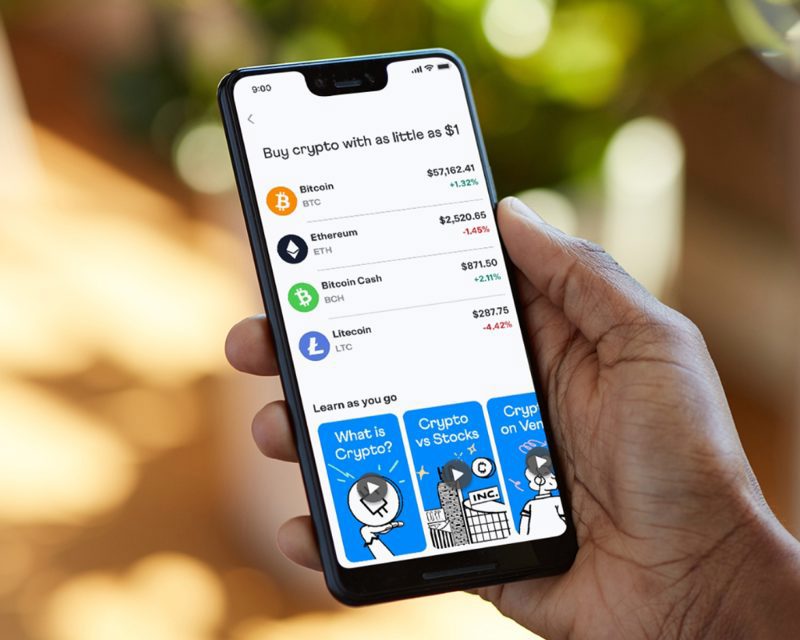
There are a few final things worth pointing out about these two payment platforms. For one, neither charges you to create an account, nor do they charge for transferring money to a bank account. However, PayPal will charge you 2.9% for all transactions, along with $0.30 for purchases via debit or credit card. With Venmo, it's 3%, but there's no fee if you pay with a debit card. Both services have also grown to allow for the purchasing of cryptocurrency, while PayPal can help small business owners secure loans between $5,000 and $100,000. Again, this is further proof that the service is more suited to merchants than Venmo at this moment in time.
As it stands, both payment platforms are good to use. If you're looking for quick money transfers and don't wish to be charged for debit card purchases, Venmo is probably the one for you. Meanwhile, if you're looking for a service to help you as a business owner, PayPal is likely the better option.
You May Also Like
 Finance
What to Put in Your Personal Money Checklist
 Finance
The Essential Financial Fraud Warning Signs
 Finance
How Big Should an Emergency Fund Be for You?